This post was originally published here.
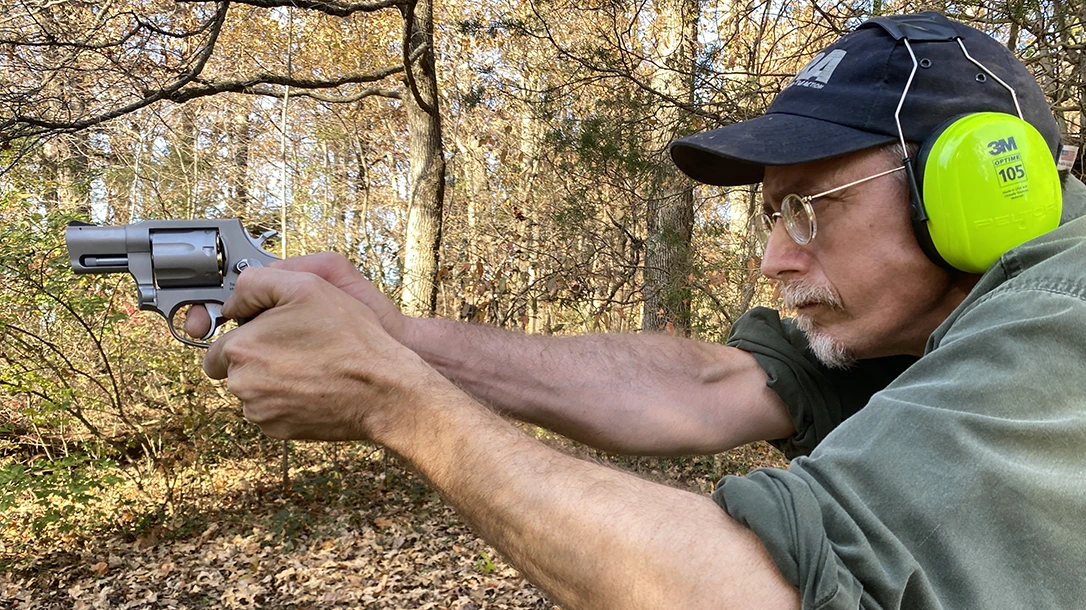
Taurus revolvers always appealed to the value-focused gun buyer. Over the last few years, production overhauls at factories have improved overall quality and narrowed the gap between the company and the premium American brands. Today, they give you even more for your money than they did in the past. Consider the all stainless steel Taurus Model 817 seven-shot, snubnose, .38 Special revolver with an MSRP of $650. But an actual retail price that’s often under $500.
The Taurus Model 817
It’s more concealable and $350 less than the larger, heavier Ruger GP-100 and S&W 686 Plus seven-shot snubnoses. However, it lacks their .357 Magnum chambering and has about a half-inch less barrel.
If you want a snubnose revolver for everyday carry and don’t want or can’t handle the .357 Magnum, the smaller size and extra capacity of the .38 Special Taurus 817 is worthy of serious consideration. I feel like I’m gaining more in practical concealability and shootability with it than I’m giving up.
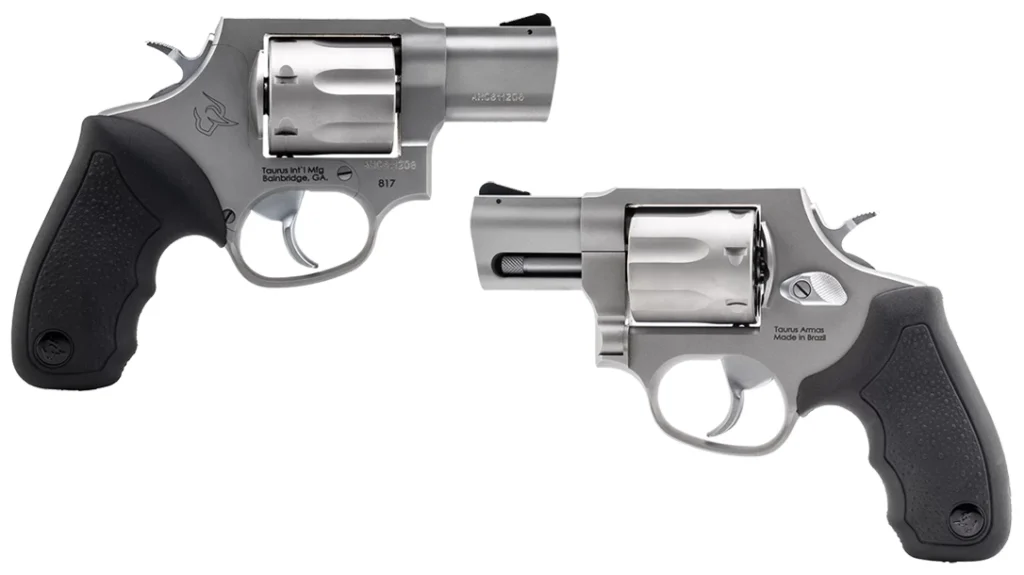
In terms of features, stainless steel’s resistance to rust wears better next to the body and in wet weather than blued steel. The full-underlug 2.1-inch barrel adds a little more weight up front to mitigate recoil and protects the ejector rod. The medium frame size is similar in general proportion to a S&W K frame. However, it has a larger 1.52-inch-diameter cylinder that’s just slightly smaller (0.038 inches) than an L-frame cylinder.
It has rugged fixed sights, a well-knurled hammer spur, and a cylinder release latch. In addition, there is a wide (0.038-inch) smooth-faced trigger that reduces the perceived weight of the trigger pull.
The once-piece grips are sized for concealment but made for shootability with a soft rubber overmold, palm swells, finger grooves, and pebble-textured sides. They don’t interfere with common speedloaders either. The metal has an even, non-reflective, sandblast-like finish and laser markings. Overall, it’s a good-looking, if business-like, revolver.
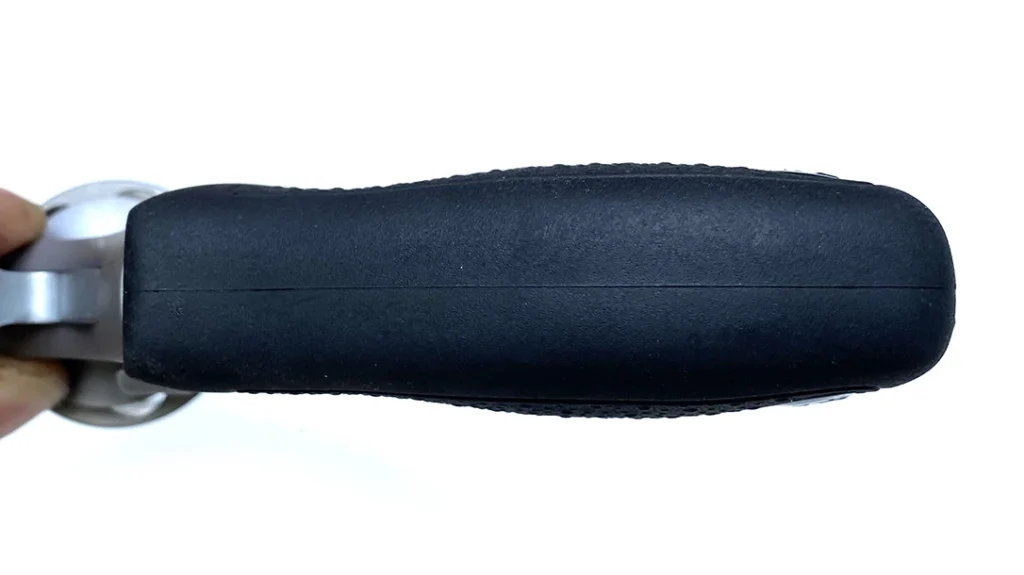
Compared to smaller five or six-shot .38 Special snubnoses (ex. S&W J Frame, Charter Arms Undercover, Colt Detective Special), you lose some concealability for one or two rounds more capacity in a revolver. The grips are small enough for just about anyone to handle. Likewise, it has enough extra weight to make recoil easier to manage and shorten recovery time between shots.
Cylinder Lockup
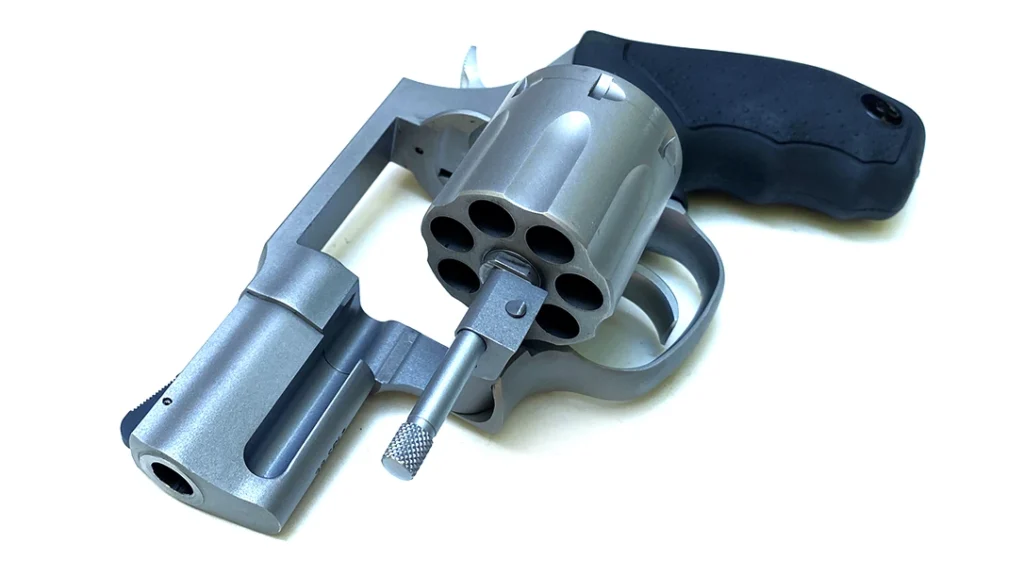
The one thing that bugs me about Taurus (and Rossi) revolvers is the comparative looseness of their cylinder lock-up compared to American brands. Their bolt does not appear to engage the mating slots in the cylinder with as much precision. This allows for more than the usual left- and right-cylinder wiggle. The counterclockwise-rotating cylinder doesn’t seem to be solidly stabilized at the front either.
Taurus uses a spring-loaded pin in the crane that engages a slot in the frame in the manner of a ball-detent lock, but without much bite. My testing has shown the lockup doesn’t seem to negatively affect accuracy when new. However, the question I ponder is: how long before it goes out of time?
My guess is probably longer than most people will ever spend shooting it. As such, perhaps it’s a moot issue; and, after all, it’s a $500 gun with a limited lifetime warranty.
Shooting the Model 817 Snubnose
I did my accuracy testing firing single-action from a bench rest at NRA 25-yard bullseye slow-fire targets set at that range. Shooting conditions were excellent. Unless the sun is directly behind you, the outline of the rear “U” notch, despite being stainless steel, looks dark. This is because it’s nestled in a recess cut into the back of the frame, which keeps it in shadow.
When combined with a black, 0.012-inch-wide, serrated steel front sight and the gun’s non-reflective matte surface finish, the sighting arrangement is durable and practical for accurate shooting in daylight. You may prefer the added visibility of a big-dot style or tritium night sight. So, the front sight is easily removed by driving out its retaining pin with a punch.
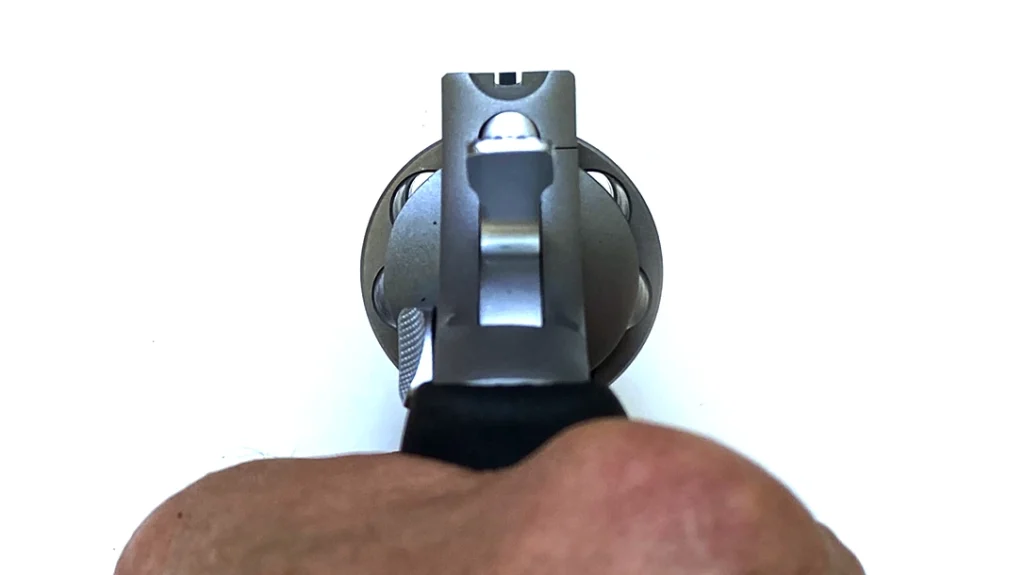
The sights were decently regulated at 25 yards. With a six o’clock point of aim on the bullseye, my groups piled up slightly to the right (about 1.5 inches). Depending on the ammo, groups were at or slightly above my point of aim.
The single-action trigger pull broke nicely at 5 pounds of pull. The double-action pull was also quite nice: smooth and consistent through its stroke, and surprisingly light at 10 pounds. Like most contemporary double-action revolvers, this one has a frame-mounted firing pin and transfer-bar passive drop safety. I had no misfires during testing.
Feeding the Snubbie
The most accurate load tested was from Hornady Critical Defense. The company’s .38 Special 110-grain FTX JHP load averaged 808 feet-per-second (FPS) and five-shot groups averaging 2.08 inches.
Noticeably more powerful was Remington’s Golden Saber Defense Compact Handgun .38 Special +P 125 grain BJHP load. The “B” stands for brass, which is what the thick jacket is made of. The front petals are twirled so they overlap around the hollow nose cavity to help control expansion. Average velocity was 903 FPS, and average groups were 2.42 inches.
For a general practice and plinking load, I tested Federal American Eagle .38 Special 130 FMJ round-nose loads. They averaged 729 FPS and groups of 2.92 inches.
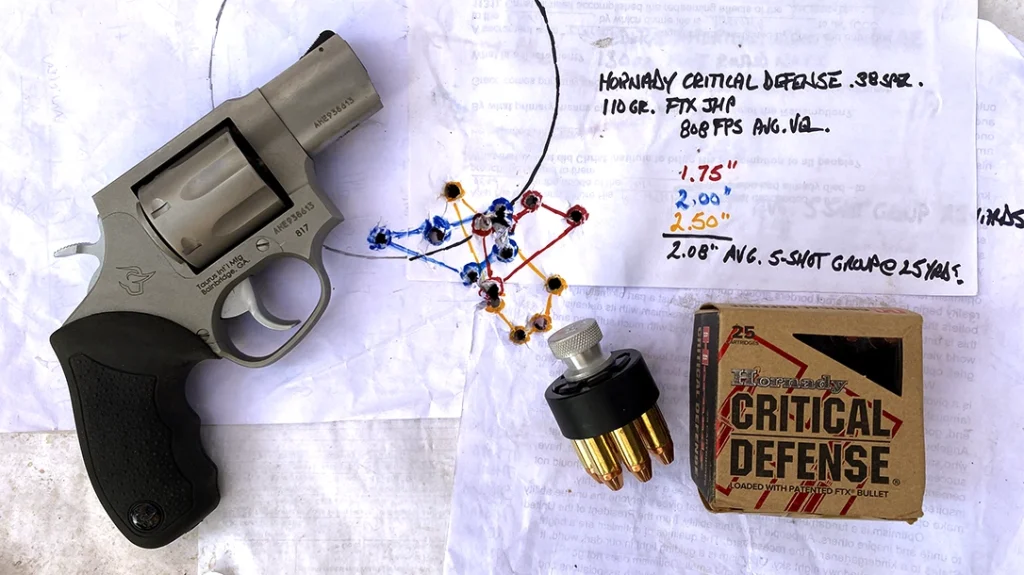
Overall, accuracy was exceptional for a snubnose. I’ve noticed that the recent Taurus and Rossi revolvers I’ve tested over the last few years have all shown much better-than-average accuracy. Carefully aimed double-action shooting at 7 yards from a standing position with a two-hand hold showed the gun shooting to point of aim and piling the shots into a 1.5-inch group. Rapid-fire double-action groups average 3.92 inches.
When it comes to fast revolver reloads, the HKS Speedloader #587 offers compact size, simplicity, and simultaneous loading of all cylinders at an economical price of $14 each. The Taurus 817 grips and cylinder release provide just enough room to directly align the speedloader over the cylinder and insert the cartridges.
Releasing the cartridges requires turning the aluminum knob a few degrees clockwise. The trick to using these effectively is to hold the cylinder steady so it doesn’t spin with the knob. The easiest way to do this is to switch the revolver to the off-hand and grip it by the cylinder while manipulating the speedloader with your shooting hand.
Reloading the Model 817
In theory, I wondered whether time could be shaved off the reload by not switching the revolver from one hand to the other. I tried using my shooting hand’s trigger finger to reach through the frame window and hold the cylinder steady while my off-hand manipulated the speedloader. Because my supporting (left) hand lacks the dexterity of my shooting (right) hand, the reloads actually took longer!
With a lot of practice and a certain amount of natural ambidexterity, some people might master this technique. I’m not one of them, and I suspect most people who own a revolver for self-defense could never invest the amount of time it would take to realize any advantage. What little training/practice time they have is better spent on gaining proficiency with the standard two-handed speedloader technique.
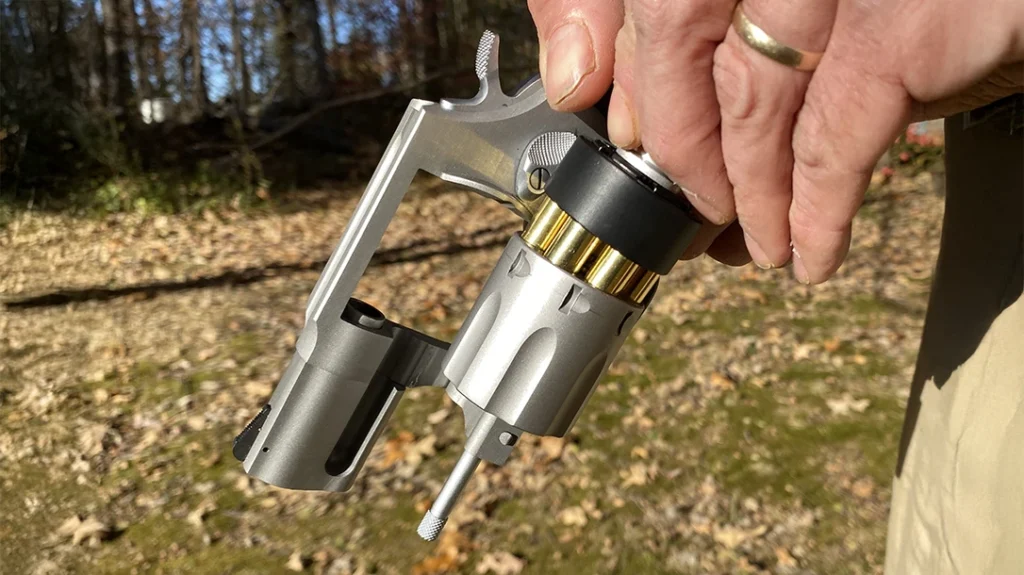
A fact to remember when using HKS speedloaders is that they will not work perfectly when the ammunition rim diameter exceeds their design parameters. Don’t bet on all ammo having identical rim diameters. They won’t! You need to test fit every round you plan to carry in a speedloader to see if it drops smoothly into the cylinder when the release knob is rotated. Before the knob is locked, the cartridges should be able to wiggle freely in the holes.
The .38 Special/.357 Magnum case design specifications call for a maximum rim diameter of 0.44 inches. The Remington and Hornady cartridges I tested had rim diameters of 0.4325 inches or less and worked fine. However, some of the Federal cartridge rims measured up to 0.436 inches and dragged against the inside of their holes. This caused those rounds to hang up in the loader and bungle the whole operation. So, I was left with some rounds in the cylinder and some on the ground.
Carrying the Model 817
Because of its fairly hefty size and 31.2-ounce loaded weight, the 817 isn’t well-suited to ankle carry and deep concealment. Many, perhaps most, will find it a little too thick for inside-the-waistband (IWB) carry. When I hit middle age, I realized IWB carry can become complicated when your waist size overtakes the actual waistband size of your pants.
The short barrel and compact grips of the Taurus 817 make it natural for use with a horizontal (Miami Vice) style shoulder holster or outside-the-waistband (OWB) belt holster.
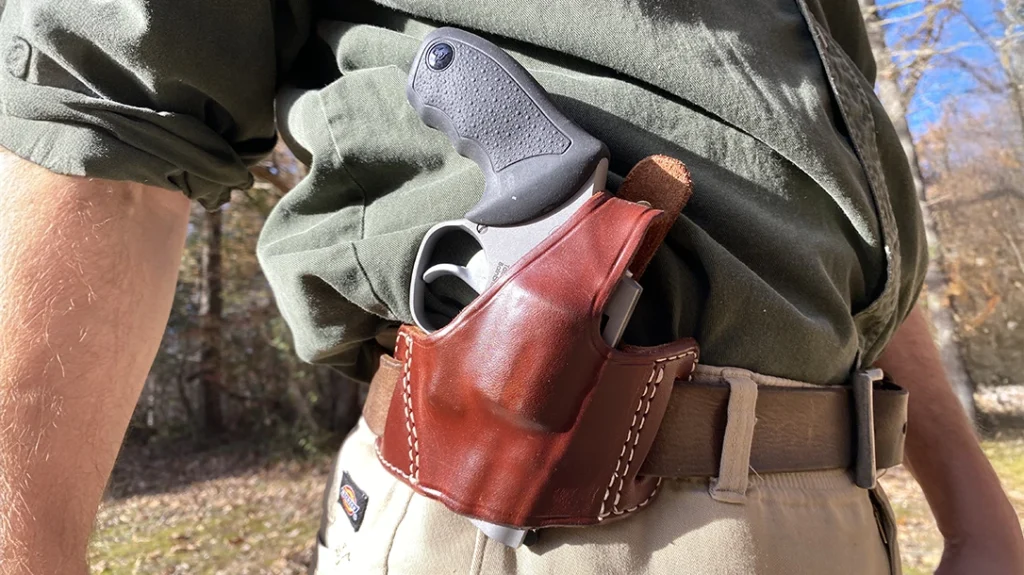
Of the latter, I prefer the high-ride type that holds the end of the muzzle just below the bottom of your waist belt because it allows more versatility in clothing selection. With this type of holster, I can wear short jackets that might otherwise awkwardly un-conceal my concealed-carry pistol when I reach out with my arms or sit.
The TripleK #420 Secret Agent is ideal for the Taurus 817. It positions the gun so that the muzzle is just protruding past the open bottom. Front and rear 1.75-inch-wide belt-loop slots, a forward cant, molding, and a thumb-break retention strap hold this heavy revolver upright and steady against your side. This is provided you wear it with an appropriately sturdy belt. MSRP is $57.
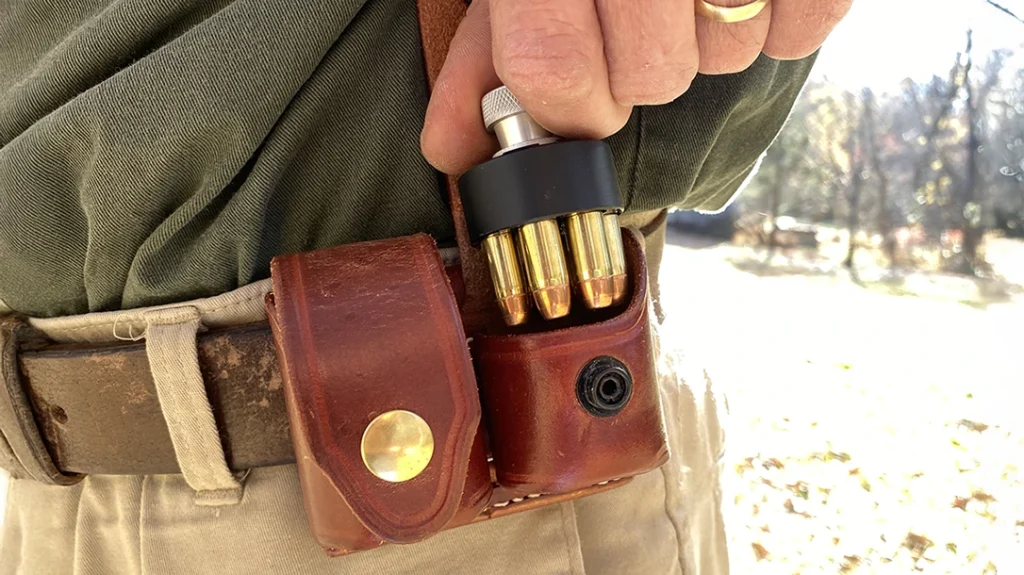
The Triple K #103 Double Speedloader Leather Case (medium size) is a dependable way to keep two full reloads readily accessible. However, its heavy construction makes it more practical for law-enforcement duty wear than for concealment under typical daily attire. It’s actually bulkier at the waist than the holstered handgun is. MSRP is $49.50.
Sans leather case, an HKS speedloader is easily carried inconspicuously and comfortably in a jacket pocket.
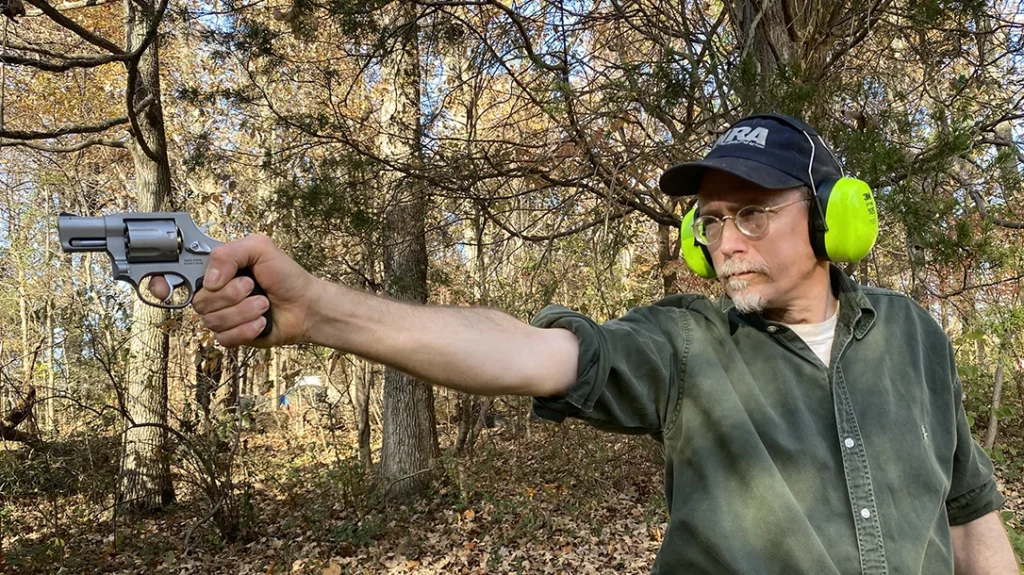
Taurus Model 817 Specs
| Action | single-action/double-action with transfer-bar drop safety |
| Caliber | .38 Special |
| Capacity | 7 rounds |
| Material | stainless steel |
| Finish | matte |
| Barrel Length | 2.13 inches |
| Overall Length | 7.00 inches |
| Height | 4.75 inches |
| Width | 1.52 inches |
| Weight | 28.2 ounces empty |
| Trigger Pull | 5 pounds single action/10 pounds double-action |
| Sights | fixed sights“U” notch rear, removable black, serrated ramp front sight |
| Stocks | concealment, fingergroove, one-piece rubber overmold |
| MSRP | $649 |
Performance
| Hornady Critical Defense .38 Special | |
| Bullet Weight & Type | 110 FTX JHP |
| Velocity | 808 |
| Best | 1.75 |
| Remington Golden Sabre Compact Handgun .38 Special +P | |
| Bullet Weight & Type | 125 BRHP |
| Velocity | 903 |
| Best | 1.69 |
| Federal American Eagle .38 Special | |
| Bullet Weight & Type | 130 FMJ RN |
| Velocity | 729 |
| Best | 1.48 |
Performance was tested with a series of five-shot groups fired at 25 yards from bench rest with a Competition Electronics Pro-Chrono DLX Digital Chronograph set 15 feet from the muzzle. Bullet weight is in grains, velocity in feet per second, and the group size in inches.
WHY OUR ARTICLES/REVIEWS DO NOT HAVE AFFILIATE LINKS
Affiliate links create a financial incentive for writers to promote certain products, which can lead to biased recommendations. This blurs the line between genuine advice and marketing, reducing trust in the content.
The post Value-Priced Snubnose: The 7-Shot Taurus Model 817 Wheelgun appeared first on Athlon Outdoors Exclusive Firearm Updates, Reviews & News.